Showing posts with label Global gaming. Show all posts

Wednesday, July 8, 2009

The Market - She's Dead, Jim. Or is She?


You may have noticed Digital Stardust has gone mute for several months now. This is no accident. The intent of DiS is to comment on the game industry as a whole, with a focus on trends and topics affecting large portions of the community - developers and gamers alike - but when the industry stagnates, there is only so much you can say before you have become a broken record. Rather than become a site riding a dead horse, we've simply gone quiet in the meantime. Plans are in the works to change the situation and provide engaging content, however these things take time, so your understanding is appreciated.

The time has come to momentarily break the silence and speak to the staleness that is slowly creeping through the industry, and possibly discover who could hold the blame for the situation the industry sits in. The results may surprise you, they may anger you, but they'll certainly get you thinking, even if you don't agree.

What is causing the video games industry to stagnate? Before you can answer this question it is important to note the industry as a whole has not come to a grinding halt. Companies such as PopCap Games are doing very well with their famous casual titles such as Peggle and Bejeweled. The stagnation does exist, however, with powerhouse companies such as EA and Activision reporting slower sales and releasing fewer blockbuster titles this year as compared to years past. But what is causing this? Console and software pricing? The poor economy? Or is it something else entirely?

The first argument in our discussion-gone-monologue sits squarely at the console price. Console price has become a hot topic of discussion among developers as available dollars to purchase consoles and increase total number of potential software buyers has decreased due to the poor economy. It just makes little sense to the unemployed consumer to purchase a pricey console, so the cost of entry has become of increasing importance to developers. Yet, the cost of entry has sat squarely in the same position since each of the current-gen consoles launched. The sorest point is named "PlayStation 3", exacerbated only by the moves of Microsoft as they position the Xbox 360 as the biggest bang for the buck on the block. Microsoft has done a good job of managing the 360 SKUs available to the consumer from the get-go, charging less for systems with fewer accessories and more for systems with more accessories, but keeping the basic console playability the same. Sony by comparison has removed functionality from their system in an effort to reduce cost, something the consumer is less concerned with when they see the system they've been eying does less for the same price. Nintendo makes a profit for each Wii sold, but they've attracted a market segment previously not known to exist, which allows the Kyoto-based developer to keep console prices the same due to their current market segment not being accustomed to price drops.

No matter where you sit in the console interest matrix, the fact remains the fun boxes are pricey machines. Developers know this and have been increasing pressure on manufacturers to drop the price, especially Sony. It is no small potatoes when the president of the company known for Guitar Hero and World of Warcraft delivers a clear threat of stopping console development for the PlayStation 3 if the console does not become more accessible to the average gaming consumer. Square-Enix has taken notice in North America and Europe, by developing the upcoming Final Fantasy XIII for the Xbox 360, breaking the PlayStation 3's exclusivity on the title and marking the first time in the franchise's history a title will launch on multiple consoles. The Land of the Rising Sun is also showing troublesome signs for the market, as console sales in general are down 25% year over year, with a large portion of this being attributed to the high cost of the PlayStation 3. Sony may have billions to recoup from the Cell processor, but their current strategy is strangling the market in general. To cope, current console lifecycles are being extended (newer hardware over time becomes older hardware, which becomes less expensive to produce and develop for) and older technologies are being extended (case in point, the Wii is a souped-up GameCube).

What about the global economic recession? Without a question this is a factor in the current equation adding up to the market situation. The average consumer is seeing a decrease in work or the same pay in a market where prices are higher than they ever have been, in effect creating less buying power power per dollar. What you could buy with a $1 now requires $2 or you get less for that same $1 (14oz. Coca-Cola, anyone?). Console prices are higher than they ever have been, but even those with the same total dollars available from before the recession are seeing their overall total effective buying power decreased, reducing the market's accessibility to them. This reduced buying power manifests itself through stronger sales of software for consoles already owned and fewer pieces of software sold for newer consoles. In short, consumers are getting more choosy about their games because they want the biggest bang for their buck. Developers often develop "throw away titles" - titles created with a small budget and a big license to generate sales with a high profit margin, which they use to fund their AAA-class blockbusting titles, however sales of "throw aways" are through the floor, reducing available R&D resources. This explains why only a handful of established franchises are turning out titles in the current market, as opposed to a more balanced mix of new franchises and established ones - with less money coming in developers are not as willing to risk their limited capital on a new franchise. Fewer new faces on the shelf create the impression of a stagnating market in the consumer's mind, leading to a circular effect of reduced interest in spending money on gaming as a whole.

So is the market stagnating? If you count the slower pace at which flashy new gaming consoles and technology driving them is being trotted out, the strategy of developers to "play it safe" by sticking to established franchises and invest in fewer new ones, and reduced console and software sales as a whole, yes. There are a few shining examples where the recession has not hit, such as the iPhone App Store and casual gaming provided by companies such as PopCap, but the market in general is down and slowing. Consoles are pricey, dollars buy less, and software sales are on a slow slide. But is there a possible underlying cause to even these reasons? Did something sew the seeds of market slowdown even before the global recession hit?

There might be.

What is this possible underlying cause? Us, the consumer. Let's back up to 2004, when the PlayStation 2 was in an intense battle with the Xbox. The PlayStation 2 was an established powerhouse with a massive install base in the millions and heavy hitting titles blowing even the highest expectations out of the water. The Xbox was making waves in North America by releasing titles so gorgeous, yet playable, even though it was never expected the console would beat the PS2 (that honor was saved for the 360 vs PS3 race). Developers were releasing titles to great, beautiful success coated in a layer of eye-candy.

If you have a good thing, doing more of it will be even better, right? This became a persistent cry from gamers - we want MORE beautiful titles, we want MORE powerful systems, and we want MORE fun. Manufactures responded by doing just that, creating powerful multi-core processors requiring billions in investment dollars. Gamers got what they wanted, but they had to pay the piper for it, and a lot of them weren't ready. The development investments needed to be recouped and the consoles were priced accordingly, bringing us into the pricey console era that exists today. The $400 console is a result of the demands of consumers and gamesmanship of the previous era, but at $400.

So the next time you're visiting your local game retailer, take some time to consider where you're going to vote with your money. Do you want the $60 title, or might it be worth waiting for the title to become less expensive? What console do you want to purchase it for? The less expensive ones, or the more expensive ones? Digital download or physical disc? Memory unit or hard drive? In an era when developers are watching the market closely, they have, they can, and they will know when sales increase due to price drops. If it becomes a recurring trend, developers will have to rethink what the public is willing to pay for their gaming fix. Instant gratification has its short term expense, for sure, but the long term effects may be more important than ever.

Sunday, December 14, 2008

Where the hell is Reggie?

A few years back Nintendo retook center stage through the act of simply updating their executive roster. In May 2004 the iconic Reggie Fils-Aime blew the doors off the quiet Japanese company with a decidedly new face with a legendary introduction. "My name is Reggie. I'm about kickin' ass, I'm about takin' names, and we're about makin' games." It was simple, succinct, direct, and effected an aggressive attitude not seen since "Sega does with Ninten DON'T" was around.

Nintendo did become aggressive, and very quickly - the Wii was born, and Reggie was all over the networks, providing a distinctive face and manner that made any viewer instantly comfortable and more importantly, interested in his products. Reggie also appeared at many trade shows and events to keep shareholders and interested parties informed and excited about Nintendo and where it was headed. But most importantly, he made us all confident in the company's success by simply saying it would happen in a believable way. Success came and the Wii is still a hard to find Christmas item three years later.

But there's one problem.

The cornucopia of Nintendo prosperity and goodness is suddenly AWOL. For the first time in years, Nintendo does not have any A-List titles hitting the market while companies like Sony and Microsoft are raking in the dollars with huge releases like Little Big Planet and Gears of War 2. Where's a Mario, Star Fox, Fire Emblem, or Zelda release for the holiday rush? Common shares of Mario's company are trading at near half the value of their peak about 18 months ago (still up from the pre-Reggie days), reflecting a lack of investor confidence amidst a global economic downturn. And a downturn in confidence is an accurate position to be of when considering The Big N. Instead of launching a new franchise to a wider install base demographic, such as Mother or Stafy, Nintendo has kept silence on any plans.

This silence is detrimental to Nintendo's image in the quickly collapsing casual market. Beyond the fact a "casual" gamer plays different titles when compared to a "hardcore" gamer, Nintendo has put their eggs in a basket that isn't dedicated to their console - "casual" gamers. Nintendo is slated to be victims by the very nature of the demographic they tried to hard to capitalize on. It really just feels like someone's going to walk into my church and invite people to the new mega-church down the street (and be quite successful because they're "casually" interested in the subject at hand). "Hardcore" gamers are what may likely carry a company in this hard economy and Nintendo is nowhere near satisfying the demographic currently more likely to fill their coffers. This brings us to our point: all these new gamers have bought their consoles and want more to do, the dedicated fans have nothing, and Reggie is nowhere to be seen. Where the hell is Reggie?


Reggie has not been out in the public spotlight for quite some time and the public interest/confidence level is starting to drift. Instead, Ye Olde Hanafunda is advertising this holiday for the DS...headlining with titles that are at least a year old. This simply does not jive with the image Nintendo has tried so hard to build over the last year. Reggie needs to get back out in the spotlight, announce some major titles, and restore confidence in both shareholders and gamers alike. In an economy where perceived value of a product is carefully scrutinized, silence simply will not make a consumer feel their investment is worthwhile and this is no time for that high pitched Italian plumber to silence his whoops and hollers.

Saturday, September 6, 2008

Somari Team Presents: The Ocarina of Piracy


For a small portion of my life I lived in Turkey. The first thing you learn about video games as an expatriate is they're notoriously hard to get for your foreign system and games on the market in Europe are disgracefully delayed in coming to market. The second thing you learn is you need a multi-system TV with automatic switching. Seeing NTSC running on a PAL TV for the first time is a nightmare that causes a mental breakdown, once you consider the thought of needing repair on your console from a foreign region. The third thing you learn is to cherish and love the Sony hologram, the Sega Swirl, and the official Nintendo Seal of Quality as piracy runs rampant.

In North America, it is not very common to walk into a Wal-Mart or Toys-R-Us and see pirated games sitting on the shelf. I was blown away in Turkey to see Super Mario 64 for Game Boy. How cool was that? Well, as it turns out, it was not cool at all. Super Mario 64 for Game Boy was some sort of hacked Super Mario Land 2 with Mario's hat carrying some sort of funny wings on it constantly. They weren't the carrot hat ears from the source title but instead I think they were some sort of ruddy ear thing inspired by the wing cap from Super Mario 64. At the time I thought it wouldn't matter that these obviously faked cartridges exist - people knew better, right? The biggest shock of all came when I visited Toys-R-Us once.

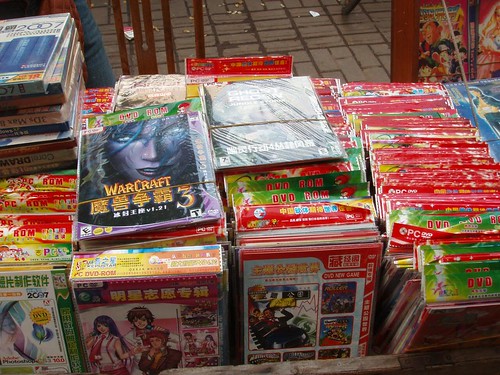
Toys-R-Us had always carried legitimate Dreamcast titles and accessories, many of which I wanted after playing them on the in-store demo. They even had some Super Nintendo titles sitting around with some licensed controllers. Nintendo 64? Obviously someone had not gotten the Ocarina of Time gospel and come to the light of Miyamoto. I chalked it up to regional differences and some launch thingie things that needed to be worked out. Fast forward a few months and Nintendo had thrown a few Ocarina of Time ads on TV to promote the launch of the console. I decided I'd pop into Toys-R-Us to check to see how the European box art would be different. There were no Nintendo 64s. Instead I was greeting with the "Super Game!" or some such named thing. I examined the box curiously and saw "Cool 3D graphics!" depicting some sort of FIFA-type game along with some miscellaneous fighters. For $30 I figured it might be worth checking out and managed to procure one after nagging my parents.

After getting home and eagerly sitting in front of the TV, I pulled out my shiny new console and realized it looked a LOT like a Playstation. Except there was no CD drive. There was a cartridge slot under the supposed disc drive cover. I knew something was wrong by now but I took the pack-in game "1,000 in 1" cartridge and stuck it in. The shock set in as soon as I hit the power button. Apparently "Cool 3D graphics!" in Chinese means "8-bit". Pirated, clunky Mario titles lived inside the cartridge along with heinous hacks of Popeye and Excitebike, among many others. I knew something wasn't kosher for sure (bright kid, wasn't I?).

I managed to return the console to Toys-R-Us thanks to not being able to speak much Turkish. Nevertheless, my eyes were opened. What was all this junk out here? I kept an eye on Toys-R-Us for a while, watching as they stocked a large amount of consoles, quickly replenishing stock when running out. After a few weeks I was fed up and contacted Nintendo of America since there was no real central number for Nintendo of Europe I could find.

Despite being overseas, Nintendo was keenly interested in listening to me and forwarded things onto their teams in Europe for handling. I kept tabs on the store, surprised when suddenly one day the entire stock of "Super Game!" was gone without being replaced for a few months. I took a small portion of satisfaction out of it, thinking maybe I had made a small difference in the video game world.

I didn't win. The next summer Toys-R-Us started to carry more "Super Game!" while never picking up the Nintendo 64. Again the pattern continued of sell and restock. I called NoA again and reported once more. I was left on my own to conclude Nintendo had followed up with Toys-R-Us corporate in Turkey and had pressured them to stop carrying the console. Ostensibly this worked for a time but had ultimately failed. I was later informed via major game news outlets Nintendo would be withdrawing distribution of the Nintendo 64 from Turkey along with titles sold there due to the extreme piracy in the area.

As a gamer, I felt sad at the news. Many titles Nintendo has published over the years are frequently considered great works of art that push the human sense of emotion. At the time I felt it was like being denied the opportunity to see a Van Gogh or Picasso. I was also angry at the pirates for using "Cool 3D Graphics!" to lure people falsely into purchasing a fake product. As I thought more about it I became outraged at piracy. It wasn't just a little here and there - it was a lot of little heres and theres that combined to drive a great product out.

I never did keep tabs on the gaming scene in Turkey when I left. I do not know if the Wii ever made a successful launch there or if the Vii did. But now you know the story of a little black console that was driven out by piracy, despite a legitimate launch effort. Next time you consider grabbing a pirated copy of some title, stop and consider this little story. Maybe you'll change your mind.

Saturday, August 23, 2008

Has Nintendo Run out of Steam?


E3 2005 - Nintendo creates world headlines and places its cajones on the line as it announces the Revolution. Skeptics run rampant, believers come to Christ, and the end seems nearer than ever. Though there are many schools of thought on the console, one thing is apparent - it's Nintendo's Final Fantasy. They will either do or die. After a series of carefully timed news releases in which we learn more about the console, we not only become impressed, but we get a sense that Nintendo has a firm roadmap in place and is in control of what its doing.

This sense of control is confirmed as Nintendo continues to ask the public to be patient for the things they want to hear - the new Marios, the Mario Karts, Smash Bros. After being asked for patience, the public is given the news over time for the things they want to hear. Sure, the console can't be found, but the games are just as awesome as we expected and the control scheme delivers.

Enter 2008. Super Smash Bros. Brawl is released after Super Mario Galaxy and is followed up with Mario Kart Wii. Then...silence. Nintendo has nothing of major interest to announce - no F-Zero title, no StarFox, no hint of a Zelda, not even a gimmie such as a Pilotwings title. To boot, no major DS releases were announced either (Where's my New Super Mario Bros 2?). We're left in the inky blackness that is quiet.

What happened Nintendo? One gets the feeling someone didn't think ahead this far. Has Nintendo become a victim of its own success? At this juncture, it's quite likely. Holiday 2008 is approaching and Nintendo has no major releases in the pipe for the first time in a long, long span. Super Mario Sluggers just isn't going to make the grade against titles such as Little Big Planet. Either way, the Big N has got to get it together - it's stock is down about $15/share from last quarter and is continuing in this trend, which does not bode well for gamers and investors alike. While Nintendo isn't going to coin heaven anytime soon, they're also not in coin heaven either.

Saturday, July 19, 2008

Feature: Konami V Roxor - The Suppression of a Dance Revolution

Editor's Note: Welcome to Digital Stardust's first full-length feature piece. Due to the length of this piece in an RSS reader, you may find reading this easier on DiS itself, where you may also choose to put in your two cents. With regards to the piece itself - this has been in the works for a few months now as we've been patiently tweaking and revising it to ensure we drive our point just right. This post only seems more relevant in light of Konami's current lawsuit over Rockband, which bears some eerie resemblances to their past lawsuit against Roxor. Although the technical points of the lawsuits may be different, we cannot help but see the similarities between the two and hope the past does not serve as an oracle for the future in this case. So, without further ado, please enjoy Digital Stardust's "Konami V Roxor - The Suppression of a Dance Revolution".


July 1, 2005 - a day infamous in music gaming history. A new press release showed up on Konami's global homepage indicating suit had been filed against Roxor games seeking "an injunction and damages against the manufacture of dance simulation game 'In The Groove'."


Many fans of dance games were outraged. Konami, developer of the Dance Dance Revolution franchise, was providing no updated legal arcade-based method to play Dance Dance Revolution in the North American territory and many were quick to point out all machines in the US were illegal Japanese imports, confirmed by the screen in game that indicates the game is "licensed for use in Japan only." Others simply felt that Konami did not want an up-and-coming competitor taking "their" market. But is this why? Or was it a simple case of patent infringement, as a majority of the lawsuit indicated? Could it have been a case of corporate greed? The outcome has been decided already but the unspoken influences of the two rivals live on. 


First, let us take a look at Dance Dance Revolution.


Dance Dance Revolution

Rewind to December 1997 at a thriving Japanese arcade. Amongst the hustle and bustle of Tokyo, a new machine is wheeled out with two speakers outlined in neon tubing, five keys arranged in a piano-like fashion with a scratch table, a display, and two smaller sets of speakers above that - also outlined in neon tubing. The machine is set down, plugged in, and left alone in a similar fashion to the identical machines being deployed in other arcades. Soon throngs of Japanese teens and young adults are playing this new machine, the "ultimate dj simulator", pressing keys in a timed fashion and "mixing" together a selection of specially composed tunes. This is beatmania. The machines were wildly popular, spawning many new sequel "mixes" in addition to a game that would share much of the same music library - Dance Dance Revolution.

Winter turned to spring 1998, which saw beatmania 2nd Style break sales records and even more widespread popularity. Spring became summer and as in August 1998 Dance Dance Revolution was released, drawing a majority of its music from the first two beatmania mixes. This was not a dj simulator, however - this time players danced to the music through a set of preset steps in the shape of arrows corresponding to locations on the "dance platform" ranging from beginner difficulty to extremely difficult, full blown aerobic routines. Just as beatmania was a hit, Dance Dance became a wild success and soon became known as "DDR" for short.


The popularity and demand for DDR in Japan lead to a quickly paced release schedule for the series - a 2nd mix in January 1999, then a 3rd mix in October 1999. 3rd Mix made the jump across the Pacific to US arcades by year's end, taking on the name of "Dance Dance Revolution" sans a mix number. This release was notable due to the speed with which it occurred (just over a year after the Japanese 1st Mix release, unheard of at the time), the market it was being launched into (the North American market traditionally shows poor sales for more unusual or novel games on consoles, let alone the bust arcade market), and the expenses Konami asked of arcade operators in terms of cost of purchasing and maintaining an arcade unit. American audiences were slow to take to the game, but nevertheless a cult following quickly began and regular players would arrange coordinated playtimes to compete for bragging rights and social interaction. A year later in October 2000 Konami released Dance Dance Revolution USA to arcades with an expanded song selection and slightly improved graphical interface. Konami would not release a new official US arcade edition until September 2006, a long six year wait.

Back in Japan the Playstation market was well established and several home versions of DDR were released, prompting fans in the US to request a home version in their territory from Konami. After a two year period of silence Konami reluctantly released a home version based on the first US arcade edition in 2001 (DDR USA had already been released a year prior to arcades). Despite the game being nothing more than port of a two year old game with "old" music, the game became a sleeper hit, with sales of the game well beyond expected levels as new fans were introduced to the home version. Driven by sales numbers, Konami released Dance Dance Revolution Konamix for the Playstation in 2001, two years after the release of DDR USA, which the game was based off of. A Disney-themed edition was also produced, which eventually saw an unmarketed US release prior to Konamix, now a highly sought after Playstation collectable due to its perceived family-friendly selection of music.


After what seemed like confident backing of the series by Konami USA, the company entered a period of lopsided releases, drawing the criticism of fans. Many arcades had benefitted from the widespread popularity of DDR to the point where major news outlets were asking if the US arcade was making a comeback. At the request of patrons many arcades sought to obtain newer releases from Japan, which contained many new features and much higher song capcity per unit. Despite many arcades being forced to obtain bootleg units due to the extreme difficulty in obtaining legitimate arcade units, many fans began to play the more "superior" versions of DDR with new features many were unaware of, leading to the criticism of Konami deliberately holding back newer features from the US market as well as the feeling of a "missing gap" in the series' progression. Another common criticism that arose was handpicking of particular songs for the official US releases. A common example is the ever-popular but still unreleased original version of Smile.dk's Butterfly in any US version of DDR, despite Konami's Jason Enos indicating on several occasions they had the rights to do so.

During the introduction process of the series to the US and Europe the Japanese editions of DDR - considered the "main line" of the series - were sporting significant improvements. 3rd Mix introduced non-stop mode (no rest period between songs), 4th Mixintroduced a battle mode in which 2 players compete for higher score, 5th Mix added full length songs (as opposed to the standard average 90 second song), 6th Mix (or DDRMAX) introduced "freeze arrows" and heralded the second generation of games in the series by making the jump from older hardware based on the Playstation 1 to hardware based on the Playstation 2 - resulting in significant graphical improvements and a much higher song capacity. An alternate branch of DDR games were also introduced under the Dance Dance Revolution Solo brand that featured six-arrows instead of four.

Fans of the series began to play the imported arcade versions, which generally were regularly updated annually with newer imported editions from Japan that boasted even more songs and better features. DDRMAX2: Dance Dance Revolution 7th Mix was introduced to Japanese arcades in March 2002, featuring a new "Oni", or challenge, mode in which a player could only miss four steps out of a nonstop 5+ song series. Dance Dance Revolution Extreme was released in December 2002, featuring both the Oni an Nonstop modes in one game (the two had until now only been implemented in alternating editions), more music, and a better library of crossover songs from the beatmania franchise and other Konami-produced titles. Despite these innovations the actual gameplay itself changed very little in the sense that one was still pressing arrows when they reached the static arrows after scrolling up and additional criticism arose regarding Konami's consistent recycling of modes and features instead of innovating the series. Konami would not release a new arcade edition in any territory for four years.


The home console releases in Japan were consistent and generally straight ports of the newer music introduced in the corresponding arcade mix, with fewer "revival" songs than in the arcade due to DVD-size constraints. All new features were intact. The North American home versions released also bore the name of the Japanese editions (confusing gamers further as no new official US arcade releases were occurring) but did not sport any of the newer music or features introduced. Gamers were left frustrated as they could not play their favorite songs from the arcade on the equivalently named home edition and were again stuck with "older" songs. Konami did attempt to remedy the issue, however, by providing a handful of licensed songs from North America in the game.


With the arcade line of releases on hiatus Konami began to develop new console-only releases for both North America and Japan beginning in 2003, however these releases were not consistent in either name or content between territories. Japanese releases came on Playstation 2 and were generally updates of fan favorites through the series, or original songs brought into the newer generation of Playstation 2-based DDR games. None were considered to be part of the main line of Nth Mix releases.

Konami USA was finally able to bring athe DDR music library in North America current through various console releases. DDR Extreme 2 was released for Playstation 2, confusing gamers somewhat as the arcade never recieved a second DDR Extreme title. Though different, the US and Japanese versions did share a common graphical interface, due to using the same base programming code to save costs. Konami USA also began to release a new line of Dance Dance Revolution games for the Xbox, then later the Xbox 360 under the names Dance Dance Revolution Ultramix and Dance Dance Revolution Universe, respectively. Each recieved multiple sequels and have not been released in Japan due to poor uptake of the Xbox consoles. Note that gamers do not consider these to "compete" with the arcade editions as the game engine is a completely different build than the one used in the arcade.

North American gamers certainly appreciated the regular releases and music a constant criticism remained - they could not play their favorite songs in the arcade with any uniformity or preference due to songs being split into different songlists when comparing console editions and arcade units. Additionally, arcade machines were now considered "old" with no new machines being released in over 3 years and home releases outstripping arcade units due to having newer music. An additional constant criticism was DDR's percieved stagnation. No new methods of play had evolved since DDRMAX in 2001. Enter In The Groove.


In The Groove


In 2001 many gamers, frustrated with way Konami was handling Dance Dance games in North America, began to develop an open souce clone of the game for PC that would allow for custom music and step (or dance) patterns. This program became known as StepMania. As fans of DDR became increasingly frustrated with Konami's release patterns the resources of the SM community grew as more fans became aware of its existence. Caution was at hand, however, as Konami was currently in suit with Andamiro over claimed patent infringement by DDR competitor Pump It Up. The suit specifically dealt with a patent Konami held regarding the interaction of a dance pad with a computer. Because of this great care was taken to encourage independent music and step pattern writers to create original content for the game. To avoid the same patent infringement the program did not include or endorse a particular method of input during play. Although the suit was settled, the software's programmers did not change their stance in encouraging original content.


Regardless of the officially encouraged movement by the authors of StepMania many fans assembled songlists identical to DDR counterparts in order to satisfy their desire to have consistent music selection between the different available software selections available. Programmers also added options to the software that would enable it to act as an arcade machine, but again did not endorse or suggest a method by which such a machine should be deployed.


Once the arcade options were developed into SM a game titled In the Groove was announced to be in development for the arcade by Roxor Games. Initial screenshots showed a highly stylized interface with a blue motif for the main menu and the in-game interface similar to DDR but changed, ostensibly to avoid confusion with DDR. Fans of DDR and StepMania showed an immediate positive interest. After extensive development that drew upon the resources of the StepMania community in terms of soliciting feedback and requesting the assistance of several prominent music and step chart composers, In the Groove was released to arcades in October 2004 - two years after Dance Dance Revolution Extreme.


Reception of In The Groove was extremely positive due to the improvements the series boasted when compared to the DDR franchise. A connected USB drive could save player statistics, show the player's name in game (as opposed to "Player 1"), and save screenshots. The most significant feature, however, were the addition of many "modifiers" that would change the way arrows displayed as they progressed up the screen. While DDR used 2-D sprites for the arrows, ITG used fully rendered three dimensional arrows, allowing for modifiers that would make the arrows appear to be scrolling up the screen from an angle, pulse with the beat by means of stretching in and out, spin around during the scrolling upwards, float in a wave pattern across the screen, among others. These modifiers could be individually activated or be be enjoyed as part of the scripted step pattern through use of the highly popular marathon mode, which was ITG's answer to DDR's nonstop mode. Another popular change was the requirement to hit three or four arrows at once, forcing one to use their hands. The developers of Dance Dance Revolution had repeatedly stated they would not allow this in the franchise.

While ITG was had a higher difficulty it was considered a significant improvement over the DDR franchise by fans, who enjoyed the newer difficulty options and refreshing mix of original soundtrack and licensed music (some of which was shared with DDR by coincidence). Response was positive and arcades began to purchase units based on patron demand. Both standalone units and DDR unit conversion kits were made available. Arcade operators reported better maintenance and support for ITG units as Roxor was based in America as opposed to Konami, who did not provide support for imported units as they were labeled for use strictly inside of Japan. Roxor provided regular support for In the Groove in the form of actively participating in internet music gaming community discussion as well as providing regular software updates to machines in order to eliminate programming glitches.


The following spring Roxor simultaneously announced a home release of In The Groove as well as In The Groove 2 for arcades. ITG was released in June 2005 for Playstation 2 in partnership with Red Octane, a few short months after being announced and within a year of the original arcade release. Roxor had again beaten Konami to the punch by providing a 100% accurate port of the arcade game to the console, complete with duplicate song lists in addition to a few "preview" tracks and modifiers for the upcoming In the Groove 2. This addressed a key frustration of many DDR fans and brought high praise to the franchise.

The Clash of David and Goliath

Shortly before the release of ITG on the home console rumors began circulating on DDR Freak, a popular music gaming community, that Konami had filed suit against Roxor. While somewhat surprising to fans, many had speculated as to why Konami had not taken action earlier to prevent the original arcade release of ITG as the games were so similar. These rumors were confirmed on July 1, 2005 when Konami's homepage announced they were filing suit in Texas against Roxor games for copyright dilution through trade dress infringement, patent infringement, and injuring Konami's business reputation.


Fans were frustrated and many declared this to be the final nail in the coffin from Konami in regards to the future of dance gaming. Fans expressed outrage and disappointment in many arguments - primarily that Konami was being hypocritical, as a majority of units in North America were illegally imported (all imported units clearly stated "For use" or "licensed for use in Japan ONLY"). Another argument was that Konami had not released an official US arcade unit in five years (the last being DDR USA) and as such had demonstrated a lack of interest in the arcade product. Still others speculated about the timing of the lawsuit - Konami was attempting to stop release of the home platform edition, which would take more of their market. Others simply felt Konami had been shown up by a superior product and was now attempting to fight back to maintain a vice grip on the dance game market. Some fans felt Konami had a legitimate complaint and Roxor had "stepped on Konami's toes" by not "asking permission". Which is the correct argument? An examination of Konami's suit is critical in answering this question.


The Lawsuit Itself

Konami's lawsuit has three essential points: Roxor violated Konami's aforementioned patent that covers the way a dance pad functions and communicates to the arcade or console unit; That In the Groove rode on the success of the Dance Dance Revolution brand and caused monetary damages to Konami by diluting the Dance Dance Revolution trademark; That In The Groove has caused monetary damage by injuring Konami's business reputation. Note that these points were never decided as the case did not go to trial.


The first point of the lawsuit is Roxor's alleged violation of Konami's patent on the dance pad interface. Roxor has claimed no patent violation occurred but it is widely held that Konami brings this argument due to the conversion kits that have been offered which turn DDR machines into ITG units. Konami argues this process violates the patent on the machine, which contradicts the common practice of arcades changing motherboards in arcade units routinely, allowing games to be changed. An example is changing a board in a Mortal Kombat machine to a Pac-Man board so the machine now is a Pac-Man machine.


The second point is that Roxor deliberately rode on the success of the DDR franchise and damaged it in turn. ITG conversion kits came with a full marquee and array of decals and stickers to allow the complete covering of all DDR trademarks on the machine (these marks and logos are collectively called trade dress), however many arcade operators did not do this. Konami argues Roxor did not do their part in requiring operators to cover all DDR trademarks on the machine and as a result a layman would observe someone playing In The Groove and assume it is Dance Dance Revolution. Konami further argues that ITG is an inferior product and that a layman would conclude the observed "Dance Dance Revolution" is also an inferior product.

The third point goes in hand with the second point. Continuing the example of the layman, Konami argues that because this person has observed "an inferior product" and assumed it is DDR, they will also assume Konami's products are inferior. As a result Konami claims to have suffered significant financial damage. Konami alleges Roxor is aware of this and has deliberately continued to produce infringing product. As a result Konami requested the court award treble damages based on intent. Litigation and discovery were widely expected, and reactions were varied.


Before Court


Many fans educated themselves on the lawsuit, reading the lawsuit papers directly and drawing conclusions. Many persisted in the argument that Konami merely felt shown up by Roxor's product and was hitting back, possibly to ensure the dance game genre stayed within Konami's "vision" (control). Others lamented Roxor may have some fault, but that many claims could be dismissed.


Summer 2005 turned to fall and In The Groove 2 was released for arcades, despite pending litigation. It boasted even more arrow modifiers and more USB drive connectivity options in addition to a much expanded songlist that included all of the In The Groove 1 songlist. Roxor pushed the standalone unit option, however continued to provide conversion kits for DDR machines in order to encourage sales of the game.


In January 2006 Roxor announced In The Groove 3 for arcades, and In The Groove 2 for Playstation 2 at the In The Groove North American Tournament Finals in Las Vegas, Nevada. Roxor partcipated in several trade shows that year, however In The Groove 3 was not on display as expected, presumably due to development delays. With the lawsuit still weighing on the dance game community, speculation continued as to the final outcome of the case and the court trial.

Final Verdict


Despite a positive outlook for the In The Groove franchise, a press release was put out by Konami and Roxor on October 18, 2006 indicating the matter had been settled. The cost? Roxor immediately transferred all rights and assests associated with In The Groove to Konami, in addition to agreeing to "respect Konami's intellectual property rights" (read: Not make a new dance game).


Fan reaction was mixed. Some fans expressed outrage at Konami and called for a boycott of Konami product while others expressed profound disappointment at the settlement, expecting Konami to squat on the rights to the ITG  franchise. Still yet others agreed with the outcome and supported the resolution. Roxor's developers remained silent on the matter, except to request fans of the dance game community continue to support dance gaming. This sentiment continues in private conversation with developers.


Aftermath

A year and a half has passed since the settlement and lasting effects have come to light. Despite popular opinion, Konami has yet to issue a statement regarding the ultimate fate of the In The Groove games. A possibility of continuation exists through integration of features into Dance Dance Revolution or a completion of In The Groove 3 for arcade or In the Groove 2 for home console, as the fate of the alpha builds and source code for both games remains unknown.


Sales of the standalone arcade unit of In The Groove 2 also continue. Some speculation exists that an entity at Konami was sympathetic to the situation as Roxor released two more patches post-suit for ITG 2 that enable custom songs and stepcharts to be used from StepMania - a sort of "last hurrah" for fans.


In The Groove for Playstation 2 is no longer on retail shelves. It is believed this is due to a combination slow intial sales in the general market in combination with the pending litigation at the time. The game is sought after as a collectors item.

Dance Dance Revolution finally recieved an arcade update through the form of Dance Dance Revolution SuperNOVA in 2006 and SuperNOVA 2. Konami V Roxor is widely credited with spurning Konami to finally release a new arcade edition worldwide (a first), complete with a matching Playstation 2 release featuring a corresponding songlist, also worldwide. The theory that ITG spurned a release is furthered by the fact the EU release ofSuperNOVA stated "The ORIGINAL and still the best" on the cover. There is minor variation in a few licensed tracks between the arcade and home editions, ostensibly to provide an incentive to play each edition. SuperNOVA was the first official US arcade unit to be released in six years, with the previous official release being Dance Dance Revolution USA. SuperNOVA 2 was released to arcades worldwide in late 2007. Dance Dance Revolution X, a new title to commemorate the franchise's 10th anniversary, has been recently announced.

The developers for In The Groove continue in new positions. Some remain at Roxor, others are freelance. Previously contracted staff for the development of In The Groove have used their talents in the Pump it Up series of dance games. It is also worth noting some of the music announced for In The Groove 3 has found its way into Pump It Up, as one of the composers retained the rights to their music and was allowing Roxor the access through a license.


And

So what's the future of music gaming? No one is certain as it is a constantly changing field a decade old. One thing is certain, however - In The Groove will have a lasting effect on Konami. One can hope it is certainly for the better. This is Digital Stardust, signing off.


Sunday, July 6, 2008

Non-Japanese are SMRT!


Video games have carried a tragic, but historic legacy of being unreleased or dumbed-down for release outside of Japan. The first prominent example of this is Nintendo of America's decision to not release Super Mario Bros. 2 and instead create a faux sequel from Doki Doki Panic, citing American gamers would struggle too much with the greatly increased difficulty of the original sequel, hurting sales in turn. It took until 2008, roughly 20 years later, when the game was properly labeled Super Mario Bros. 2 for release in North America. Europe got it even worse - they only had access to the title on the Wii's virtual console for a mere week or so before it was taken down as part of its promotional run. The fortunate upshot of this was a very unique title got a chance to show its face around the world when it would have wasted away, otherwise. However, I digress...

Why is it a trend today to release games where death either contains no real consequence (because you have 2,000 other lives) or you just cannot die period? Is it some sort of hyperextension of Dr. Spock's theories or the fact companies really do think non-Japanese are impatient or something else entirely? Regardless of the reason, non-Japanese gamers are being denied many wonderful opportunities in gaming, either permanently or for extended periods of time.

Point-in-case: Square-Enix and Kingdom Hearts II Final Mix. This title will likely never see the light of day outside of Japan, however it is one of the most masterful pieces of gaming to be released since The Legend of Zelda: Ocarina of Time (Note: I am not speaking about the original KHII, I am speaking very specifically of Final Mix). When the original KHII was released in North America, critics bemoaned the lack of a truly-difficult setting, which turned the game into a button mash-fest. Despite having three difficulty settings included, many believed the hardest setting available was equal to a regular strength difficulty in other games. The updated Kingdom Hearts II Final Mix is only available through Japanese import, and by comparison contains a much more difficult game when set to the same "hard" difficulty equivalent of the North American edition. It is in this difference of difficulty-between-regions that a whole new level of appreciation can be gained. New bosses and much needed bonus material aside - the game demands incredibly precise timing to even score a hit on some bosses that was not even a thought to me when I played the American version. Clearly the US version's difficulty was noticeably lessened compared to the Japanese version. Final Mix even has a newer, even more difficult level of play, named "Critical"! Despite all this potential insanity, the sense of personal accomplishment in conquering the game was far better than any sort of Gamerscore achievement.

There is a version of Tetris, rarely seen outside of Japan, called Tetris: The Grandmaster. Played in arcades, this version of the classic puzzler starts off like any other version, however it progresses to incredible speeds, eventually entering a mode commonly called 20G. Pieces fall instantly down and have slightly less than a second before they lock in place, creating an incredibly difficult but rewarding experience - after lasting a few minutes at 20G, you can earn the highly coveted, but rarely earned rank of "Grandmaster" and your name will remain on the high score screen for all to see. Interested? Unless you live by an intensely dedicated import arcade, you'll probably never see the game outside of some YouTube videos and an emulator. Reason for lack of release is widely believed to be the level of difficulty being too hard for non-Japanese.

Sadly, it seems like the small details that made a game an AAA-grade title are going by the wayside in favor of not disappointing someone who cannot beat it on the first try. There is still something to be said in this day and age for the sense of personal accomplishment felt when after a few tries at timing a particular move against a boss it is finally pulled off and you progress a little further. Am I the only person who played NES games in the 1980s and despite becoming frustrated, knew I was making it a little further each time I died? Where, I ask you, dear game developers, have all the flowers gone? Japan?

Perhaps all the flowers are being squandered on the new gamer. A school of thought has been established which dictates games must be fully accessible to every single person who picks it up. Death can't loom too close and game overs can't have full consequences. Certainly all games should be playable by everyone but catering so very hard to ensure everyone can play easily has resulted in the loss of the "oni"s and "critical" modes that didn't cost a lot of programming time and satisfied plenty of the old guard of gamers.

I'm not arguing all titles released outside of Japan are dumbed down for the sake of other regions. I've participated in Ghouls 'n Ghosts, Puyo Pop, F-Zero, Castlevania, Contra, and Ninja Gaiden and pulled my hair out multiple times. While these games are testaments to the legacy of video games, there are fewer and fewer hard titles as time goes by, replaced with titles that are "softer" as they're localized. This isn't to say games that had problems, such as The Legend of Zelda: Majora's Mask and Wind Waker, which had the owl statues added and a greatly improved triforce locator implemented, are softer. These are necessary improvements and are good for gameplay.

I'm also not arguing that all games should be made blisteringly hard, but there should be a good, lasting level of difficulty available for those who desire a challenge beyond the typical. Don't pull the "but the children!" card - Japan has children too, and American children of the late 1980s and early 1990s lived without severe defects after dying on the Mother Brain sequence for the 48th time. All I want is a good challenge to be available to me, if I so desire. It makes good business sense, too. It increases a good game's replay value and overall recognition among fans, and carries the side effect of me being far more likely to purchase a sequel title.

Remember "Beaver Bother"? I do. The feeling of accomplishment was worth it.

Thursday, April 17, 2008

Are you an American Gamer?


The gaming world has three different types of games.

Japanese: The first widely accepted popular game type, the Japanese game, is one that most people are familiar with. Frequently, these games tend to have more in-depth plot and cerebral requirements than games of other regions. One can argue that these types of games are the "weird" games that one's older sister writes off as being "nerdy" when speaking about them to their friends. Japanese games tend to also follow the tendency of Japanese culture to be more artistic or have unusual, fantastic premises either based on very realistic but tweaked scenarios, or complete fantasy adventures a la Final Fantasy. Often games are developed with a more international view but with a Japanese twist (and sometimes twisted to the point where localization for other markets is deemed impossible).

American: American games emerged during the era of the Xbox (mostly because there was no American console manufacturer prior). These games tend to be more rooted in real life than others. An American game's plot or premise will tend to exist on a platform based on the real world, where a Japanese game player to lends himself more often to believing the plot exists in an alternate/parallel universe. American games also tend to involve less strategy (compared to popular titles such as Final Fantasy) and be based on less fantastic types of action, such as street racing or first person shooters. Often times, less advance planning is mentally required when playing an American console game.

Euro: European games tend to be a melding of American and Japanese games, despite gamers in this territory often being given delayed releases or heavily altered titles. European games tend to be artistic and less localized than American titles. Many European titles will also contain historic references or multicultural references. Games from this region are relatively new and their unique flavor is still in the works but all signs point to an emphasis on art.

So why do these disparities exist? Several reasons can be hypothesized, however I will only list a few.

The first reason for different game types lies in culture. While perhaps seeming shallow at face value, this is the most complex reason for the difference in games. Sure, Japan and the US have different cultural interests - the Japanese tend to be more open than Americans for the most part - but certainly things often overlooked matter. Schooling Japan is different than American, and one can even go out and argue while Americans aren't "stupid", the Japanese certainly demand much higher standards in education than have been established in the US. This obviously can play into a population's interest in software demands, interactivity, and contributed innovation to any industry. Likewise, the Japanese have established a national directive stating creativity should be a primary concern of the country to drive the economy, where the American economy has historically been on top and national cultural priorities have been placed on other things, such as personal recreation - like street racing and sports, for instance.

Continuing this reason into the next we come to geography and impact on ethnocentrism. Japan is a small country and with limited natural resources the country has connected to the international community and gained the associated perspective. The US has a significant amount of natural resources and space, and as mentioned previously, has been able to place primary cultural interests in more recreational items. Simply put, a lot of the American public has never had a reason to be interested in the cultures and experiences of other countries when a strong economy has allowed individual members of the population to pursue their own personal interests exclusively. As a result, significant localization and tweaking is often executed on a Japanese game before a US release. Very often many games will not be released at all, such as the case with Super Mario Bros 2 or several of the Final Fantasy titles back in the 1990s, due the expectation the American culture would not accept the title or franchise. The American public's intense interest in personal interests has also spawned a library of software based around these activities, many of which are often found only in the American culture due to lack of need for international connections. Couple this with the tendency for American games to be rooted in real life along with self-absorbed activities and you have a recipe for poor sales in other regions. Think Xbox 360 in Japan.

The last major reason I will throw out for thought is technology. The Japanese have historically been associated as the wizards of technology and have made a killing in the market as a result. In the late 1980s and 1990s American games could not sustain themselves against Japanese titles, due to American titles being less engaging than their counterparts in terms of less exquisite graphics and more clumsy understanding of gameplay technology. A Final Fantasy title was simply more impressive, and as a result immersive, when compared to other titles. In fact, the first recognizably "American" title, despite being developed in the UK, was Goldeneye 007. By comparison, five Mario titles had emerged on the market at the time, praised for pushing technology and gameplay experiences, with the most recent being Super Mario 64 and its solid grasp of 3D.

My intent in this piece is not to say Americans are selfish or the Japanese are picky - this is hardly the case. Certainly there are gamers that can appreciate titles from anywhere and plenty of crossover does occur between tastes and titles on any market. I myself, find that I have very Japanese tastes, mostly due to my upbringing and historical experiences but I definitely enjoy a good game of Burnout Paradise and Portal when I get the chance. Cross-regional tastes are emerging, accelerated by consoles like the Wii, which offers both experiences. Here's to hoping each region gets to enjoy other regions' contributions to the vast game library of the world. There are some real gems out there.